
The WhiteFence Home Services blog has moved! Please visit blog.whitefence.com your one source for all your home services information.

COMPARE RATES FOR ESSENTIAL HOME SERVICES

Street Address:
Apt/Suite:
Zip Code:

Insurance Archives

« Industry Buzz | Main | Movie Rental News »

Auto Insurance Deals for Teenagers?


Typically, there are a few constants about our society that we tend to accept. Green means go. Red means stop. Turn off your cell phone at a movie theater. You know, the usual. One of those staples of our modern world happens to do with teenagers and car insurance. More specifically, that it's typically expensive to insure a teenager to drive. However, it seems that things are changing.

According to CarInsurance, more and more insurance providers are starting to offer better, cheaper coverage for young drivers. It seems that this "move comes amid greater competition among insurance companies, and at a time that young drivers are not quite the risk they once were for a variety of reasons".

Some of the factors that are easing the bill on young drivers include:

  • State restrictions on teenage drivers. Texas, for instance, has a curfew for young drivers. In addition, some states have "no cell phone" policies and a limit on whether or not teenagers can drive others to and fro.
  • Parental involvement and investment with devices like DriveCam, which "can record what's going on inside a car and the view outside through the windshield". There are even mechanisms which act like a GPS signal on the car, telling parents where the car is. This device can also be used to shut the car off.
  • Safety programs. Some auto insurance agencies are offering discounts for drivers with good grades, or who participate in certain recommended safety courses.

All in all, it's good to get informed about what insurance companies are doing when it comes to young drivers. To read more about auto insurance for teenagers, head to CarInsurance.

If you're currently in the market for auto insurance, did you know that you can find that in addition to other insurance services online at WhiteFence?
Tags: , , , ,

Experts Predict Above-Normal Atlantic Hurricane Season

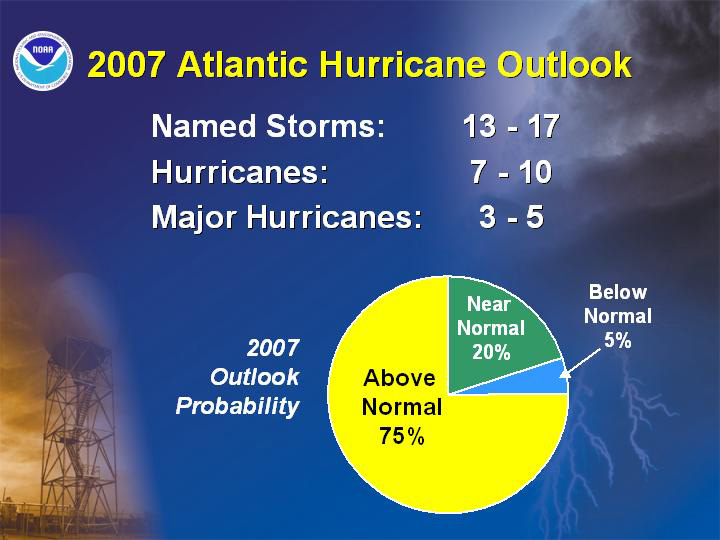
Experts Predict Above-Normal Atlantic Hurricane Season Experts at the NOAA Climate Prediction Center are projecting a 75 percent chance that the Atlantic Hurricane Season will be above normal this year—showing the ongoing active hurricane era remains strong. With the start of the hurricane season upon us, NOAA recommends those in hurricane-prone regions to begin their preparation plans.

"For the 2007 Atlantic hurricane season, NOAA scientists predict 13 to 17 named storms, with seven to 10 becoming hurricanes, of which three to five could become major hurricanes of Category 3 strength or higher," said retired Navy Vice Adm. Conrad C. Lautenbacher, Ph.D., undersecretary of commerce for oceans and atmosphere and NOAA administrator. An average Atlantic hurricane season brings 11 named storms, with six becoming hurricanes, including two major hurricanes.

"With expectations for an active season, it is critically important that people who live in East and Gulf coastal areas as well as the Caribbean be prepared," said Bill Proenza, NOAA National Hurricane Center director. "Now is the time to update your hurricane plan, not when the storm is bearing down on you."

The Atlantic hurricane season runs from June 1 through November 30, with peak activity occurring August through October. The NOAA Climate Prediction Center will issue an updated seasonal forecast in August just prior to the historical peak of the season.

For more information, check out the NOAA site.

Yahoo Goes Antiphishing

Yahoo Inc. is testing a security service designed to prevent Web surfers from landing on sites that look like they are from Yahoo but actually fakes set up by criminals to carry out phishing scams. The service, currently supporting only U.S. Yahoo Web sites, lets users know if they have landed on a legitimate Yahoo sign-in Web page, preventing them from entering their Yahoo ID and password on a phishing site. A Yahoo spokeswoman said it is being tested and hasn't been officially announced.

A huge online security problem, phishing scams set up legitimate-looking Web sites from well-known companies, such as banks, online stores, and Web portals, and try to lure people to them via e-mail and other methods. The scammer's main goal is to convince people to enter sensitive information, such as passwords and credit card numbers, leaving them vulnerable to ID theft and fraud.

Each Yahoo sign-in seal will be associated with an individual computer, requiring to installation on every computer a person plans on using. Once installed, the seal will appear on Yahoo sign-in screens, letting the user know the site is genuine. To create a seal, users will need to either enter text terms or upload an image unique to them. This information is displayed in the seal that only appears on legitimate Yahoo sign-in screens.

Test this new Yahoo! service or read more about it in the PCWORLD article Yahoo Tests Antiphishing Service

Preparing for the hurricane season

Hurricanes present several dangers, including storm surges, high winds, tornadoes and flooding. Because of all of these dangers, you need to be prepared. You should have a plan for any type of disaster that can occur during a hurricane. You should plan escape routes as well as consider where you would go should a hurricane occur and you need to evacuate.

When planning where you will go should you need to evacuate, you need to make provisions for your pets. The need for having an emergency plan for your pets was brought to light by the tragedies that occurred during Hurricane Katrina. Because hotels and shelters may not take pets, you will have to make sure other accommodations are available.

Additionally, everyone in a hurricane prone area should have disaster supply kit. It should include water, non-perishable food, batteries, flashlights, bedding and pillows, clothing, first aid kit, pet supplies, toiletries, radio, telephones and other essential items. If you have a kit prepared from a previous hurricane season, you should review the items and make sure you do not need to replace anything.

To reduce the damage to your house caused by the storm, you will need to secure your home. The most important precaution you can take to reduce damage to your home and property is to protect the areas where wind can enter. According to recent wind technology research, it is important to strengthen the exterior of your house so wind and debris do not tear large openings in it. You can do this by protecting and reinforcing five critical areas, namely the roof, straps, shutters, doors and garage doors of your home.

Finally, before hurricane season, you should make sure your home and property is properly insured. If you are renting, you should get a renters insurance policy, since your landlord's insurance policy only covers structural damage to the building.

Guide for first-time renters

Are you a first-time renter? If you never rented before, you should check out the article 7 sins of first-time renters. The seven sins it lists are:

  1. Underestimating your cost of living
  2. Not prioritizing correctly your list of needs and wants for your new apartment
  3. Not seeing the property before you sign the lease
  4. Failing to read the lease completely
  5. Not connecting your utilities on time
  6. Failing to get renters insurance
  7. Forgetting basic items.

At worst, forgetting these items can have potentially disastrous results. Make sure to read the article before you begin your apartment search so you can avoid these pitfalls.

Learning about Renters Insurance

Not really sure why you would need renters insurance? Many renters are shocked to find out their apartment complex's insurance only covers structural damage to the building. That means if you don't have renters insurance, any damage to your personal belongings will not be covered. That's why all renters should get renters insurance. Policies vary, but many cover direct physical loss to personal property if damaged by:

  • Fire
  • Lightning
  • Windstorm
  • Hail
  • Riot or civil commotion
  • Smoke
  • Vandalism or malicious mischief
  • Theft
  • Falling objects
  • Weight of ice, snow or sleet
  • Accidental discharge or overflow of water or steam
  • Sudden accidental tearing, cracking or burning of certain appliances or water heating systems
  • Freezing of certain systems or appliances
  • Sudden and accidental damage from artificially generated electric current
  • Volcanic eruption

MSN Money has a great article on the basics of renters insurance. You should take a look at it if you are a renter. You can find out the benefits of renters insurance as well as tips on how to keep your premium low.

Staying informed during hurricane season

Since hurricane season began last Thursday, it is good for you to know where you can go to get up-to-date information on hurricane activity. One good cite is the National Oceanic and Atmospheric Administration's National Hurricane Center Web site. This site gives you information on current storms, hurricane predictions and hurricane history. If you are in a hurricane prone area, you should check out this Web site.

Busy Hurricane Season Expected

Although the National Hurricane Center doesn't expect a repeat of the record-making 2005 hurricane season, they have predicted that their will be between four to six major hurricanes, with as many as 16 named storms. Additionally, Max Mayfield, the director for National Hurricane Center, suggests that everyone on the gulf coast prepare for a storm, since it only takes one hurricane hitting your town to make it a "bad season."

Along with putting together emergency supplies and learning evacuation routes, now is the time to check your insurance to make sure you are covered in the case of a hurricane. Once you know that a hurricane is on its way to your hometown, it is too late to buy additional insurance. If you find that you do need insurance, you can get renters insurance quickly using WhiteFence.

Renter's Insurance advice

One of the first things on your agenda when you get your own place should be to get renter's insurance. Why is that, you may ask. It is because it takes only a few dollars a month to protect all your personal belongings that it has taken you years to accumulate. Your landlord's insurance only covers damage to the apartment building. If anything happens, like a fire or water leak, that damages your personal property, you will have to pay the bill to replace or repair your property.

To look into buying renter's insurance, you can go to GetRentersInsurance. This site, which is powered by WhiteFence, can help you find the coverage you need. Additionally, you can read Renter's Insurance is a necessity for college to find out more reasons why you need to protect yourself with renter's insurance

2006 Hurricane Season Could Be Worse than 2005

It may seam hard to believe, but forecasters are predicting that the 2006 Hurricane season will be even worse than the record setting 2005 season. Colorado State University meteorologist Professor William Gray has predicted there will be 17 named storms in 2006. Gray also said there is an 81 percent probability that a major category three, four or five hurricane will make landfall somewhere on the U.S. coastline. The average probability during the last century has been 52 percent. Across all hurricane statistics, 2006 is being forecasted to be about twice as active as the average hurricane season.

Although hurricane season begins June 1, now is the time to start preparing. Below are some links with checklists that you can use to make sure you are ready.

Also remember to check your insurance policies (Home or Renters and Auto) to make sure that you are covered. Renters, please remember that your landlords insurance does NOT cover your belongings. If you want to protect your belongings you must purchase your own renters insurance policy. Also remember that almost all insurance carriers stop selling renters insurance (and other types of insurance as well) when a hurricane is approaching; so don't wait until the last minute to purchase insurance or it may be too late.

Rising insurance rates

As we approach a hurricane season purported to possibly be worst than the last, homeowners not just in the gulf coast might need to worry about their insurance.

In the article Homeowners Face Rising Insurance Rates in the Wall Street Journal, author M.P. McQueen says that "major insurers are dropping policies or not writing new ones in coastal areas from Texas to Florida and up the Eastern Seaboard as far north as Massachusetts."

But the impact on insurance rates is spreading beyond the states in the gulf coast. Allstate, the second largest home insurer, plans to increase premiums in all 49 states in which it does business. Allstate says it is charging higher premiums to try to recoup the sharp increase in reinsurance costs. According to the article, "reinsurance companies, whose business it is to insure the insurer, have begun charging sharply higher prices in anticipation that the hurricanes will become more frequent and more intense."

To avoid being dropped by an insurer, McQueen suggests that a consumer should never file petty claims, as just one such claim could cause a consumer to be dropped by their insurance company. Also, when buying home insurance, buy from a company that has high financial rating from a well-respected rating firm, such as A.M. Best Co. or Weiss Group Inc. Companies that have high financial rating are less likely to drop you or fail to pay a claim because of their own financial woes.